When Importing Custom LED Driving Lights from China, Can My Supplier Provide Beam Pattern or Lighting Simulations?
When importing custom LED driving lights from China, buyers often ask whether suppliers can provide beam pattern data or lighting simulations before production. In practice, many competent Chinese LED manufacturers can support this requirement—but only when the product has been properly designed, tested, and documented [1][2].
For OEM and ODM projects, beam simulations are not just a technical add-on; they are a critical tool for validating optical performance, reducing development risk, and supporting certification in target markets.
- Why Are Beam Simulations Useful Before Tooling?
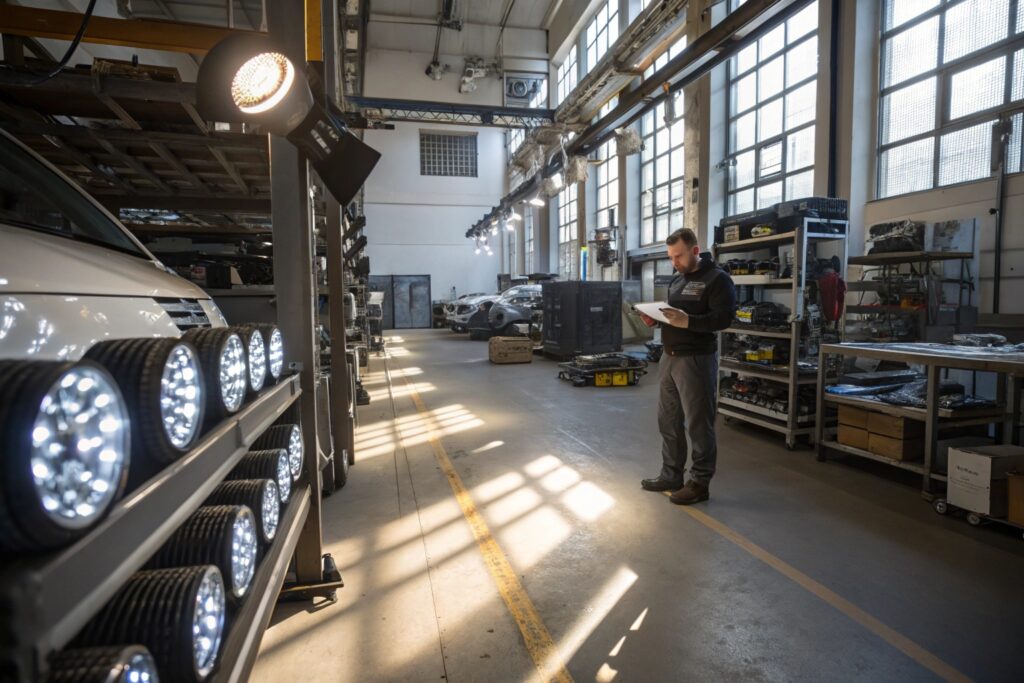
Beam simulations are especially valuable before tooling and mass production, when design changes are still flexible and cost-effective. Many Chinese LED driving light suppliers offer custom optics and beam pattern design as part of their OEM/ODM services, supported by optical designers who can tailor light distribution to specific vehicle or road-use scenarios.
Most custom LED driving lights are designed with spot, flood, or combo beam patterns. In general practice, spot beams are within 30°, flood beams fall roughly between 30–60°, and combo beams combine both distance and width. Simulations allow buyers to confirm these optical characteristics visually and numerically before committing to tooling.
During the custom design phase, suppliers typically provide technical drawings and 3D renderings. When combined with beam simulations, these previews help ensure the reflector, lens, and LED layout will deliver the intended performance.
- How Accurate Are Pre-Production Lighting Simulations?
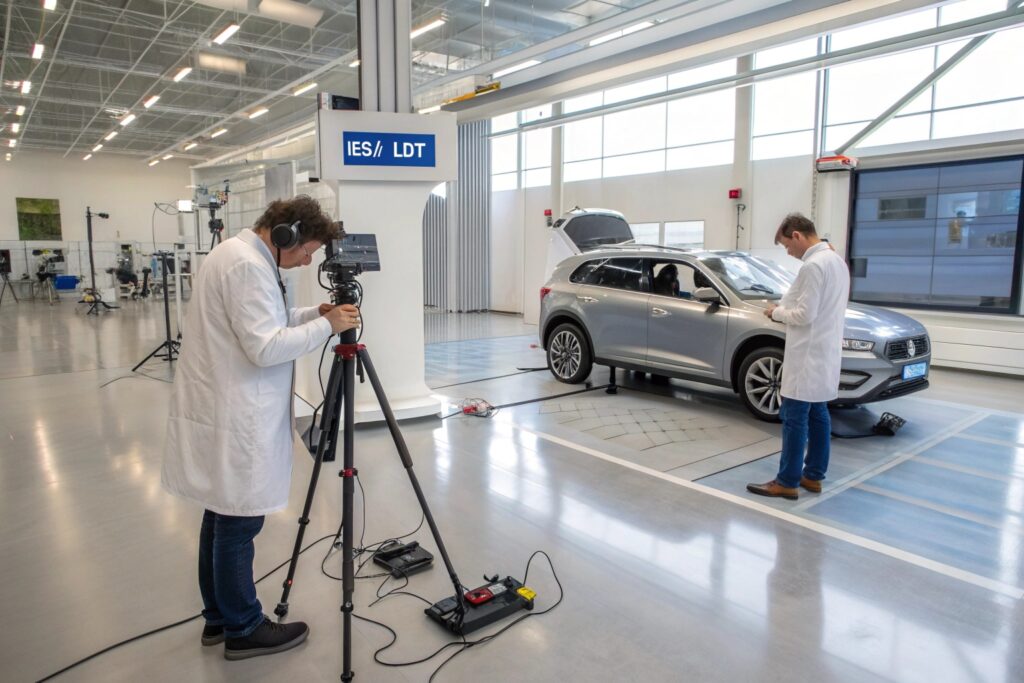
The accuracy of lighting simulations depends on whether the supplier has conducted real photometric testing on the exact model. Reputable manufacturers can provide IES or LDT photometric files, which describe beam distribution, luminous intensity, and output, and can be imported into professional lighting software such as DIALux, AGi32, Relux, or Revit [3][4][5].
It is also common practice for manufacturers to deliver detailed photometric performance specifications on request, including beam angle, candela values, and isolux or iso-candela curves [4][6]. However, standard product pages usually list only basic beam pattern classifications rather than full simulation data, unless buyers explicitly request it.
If custom simulations are required, buyers should clearly specify file formats (e.g., IES) and the exact part number in their RFQ to avoid misunderstandings.

- What Risks Exist Without Optical Previews?
Without optical previews or simulation data, buyers face increased uncertainty. Many smaller or low-cost factories provide only basic beam descriptions or marketing images, as they may not invest in full goniophotometer or photometric testing [1][2].
This can lead to issues such as uneven illumination, insufficient throw distance, excessive glare, or mismatch with local road conditions. Discovering these problems after tooling or certification testing can result in redesigns, delays, or rejected shipments.
When a supplier is unwilling or unable to provide simulation files or photometric reports, it often indicates that no formal optical testing has been conducted on that model.

- How Do Simulations Reduce Certification Failure Risk?
Lighting simulations play a key role in reducing certification failure risk. By analyzing beam distribution and intensity early, engineers can identify potential compliance issues before submitting products for regulatory testing.
Suppliers that conduct proper photometric testing can provide official photometric reports showing lumen output, beam angle, and isolux curves, which support certification planning [7][8]. If such data is unavailable, independent third-party photometric testing labs can generate IES or LDT files from physical samples, ensuring reliable simulations and regulatory validation [8][9].
Although third-party testing adds cost, it often saves time and prevents costly rework when entering regulated markets.

Summary
When importing custom LED driving lights from China, beam pattern data and lighting simulations should be treated as essential technical requirements, not optional extras. Many capable Chinese manufacturers can provide custom optical design, defined spot, flood, and combo beam patterns, as well as pre-production simulations—but only when proper photometric testing and documentation are in place.
Beam simulations help buyers validate optical performance before tooling, reduce design and compliance risks, and avoid costly corrections later in the project lifecycle. While reputable suppliers can provide IES or LDT photometric files and detailed test reports, this information is rarely included by default and must be clearly requested during the RFQ stage.
For buyers targeting regulated or performance-critical markets, early optical validation—either through qualified suppliers or independent third-party testing—significantly improves project predictability, certification success rates, and overall time-to-market. Asking the right optical questions early turns a sourcing exercise into a controlled engineering process.
References
- [1] Alibaba LED Street Lights IES Files
- [2] Maplesourcing Product Sourcing Guide to Import LED Lights from China
- [3] Flexfire LED Photometric Data IES Files
- [4] Faro IES Light Files Guide
- [5] FXL Photometrics IES Files
- [6] Denali Electronics LED Light Beam Patterns
- [7] XicoLED Custom IES Photometrics Services
- [8] Intertek Automotive Lighting and Photometric Testing
- [9] EliteTest Lighting Industry Testing Services
- [10] Tu-Bu How to Import Industrial Linear LED Light from China