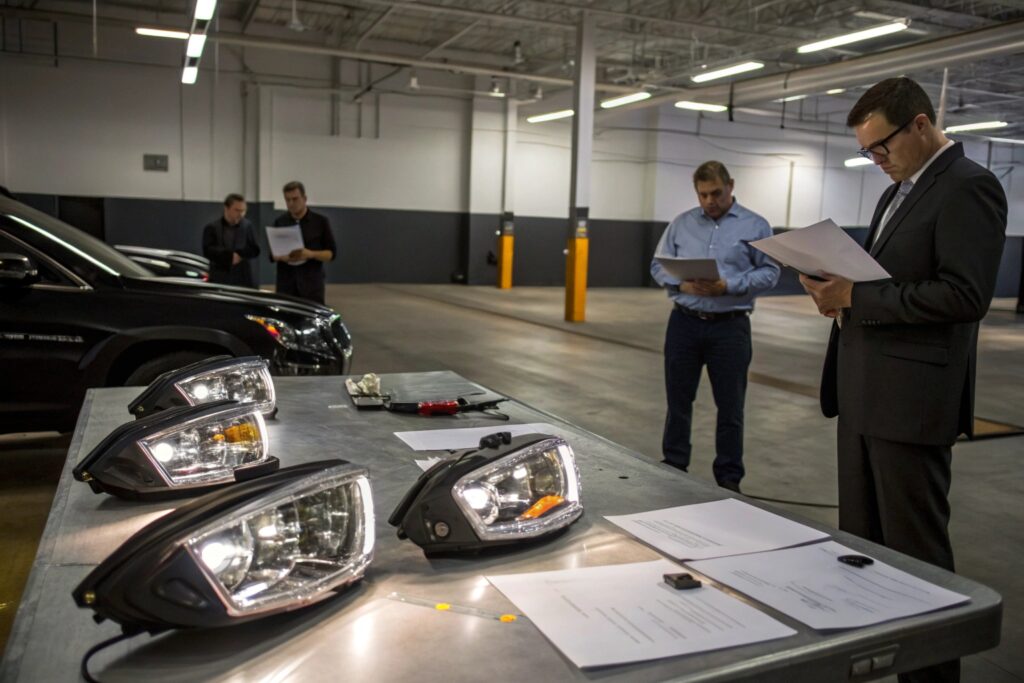
How Do I Validate Samples When Importing Custom LED Driving Lights from China?
When importing custom LED driving lights from China, sample validation is a critical step that directly impacts product quality, compliance, and long-term brand reputation. Incomplete or informal sample approval often leads to disputes, inconsistent mass production, or costly market failures. A structured validation process helps ensure that what you approve is exactly what you receive at scale.
This article outlines a practical, professional approach to validating LED driving light samples before committing to bulk orders.
1. How Do I Check If Samples Fully Match My Drawings and Specifications?
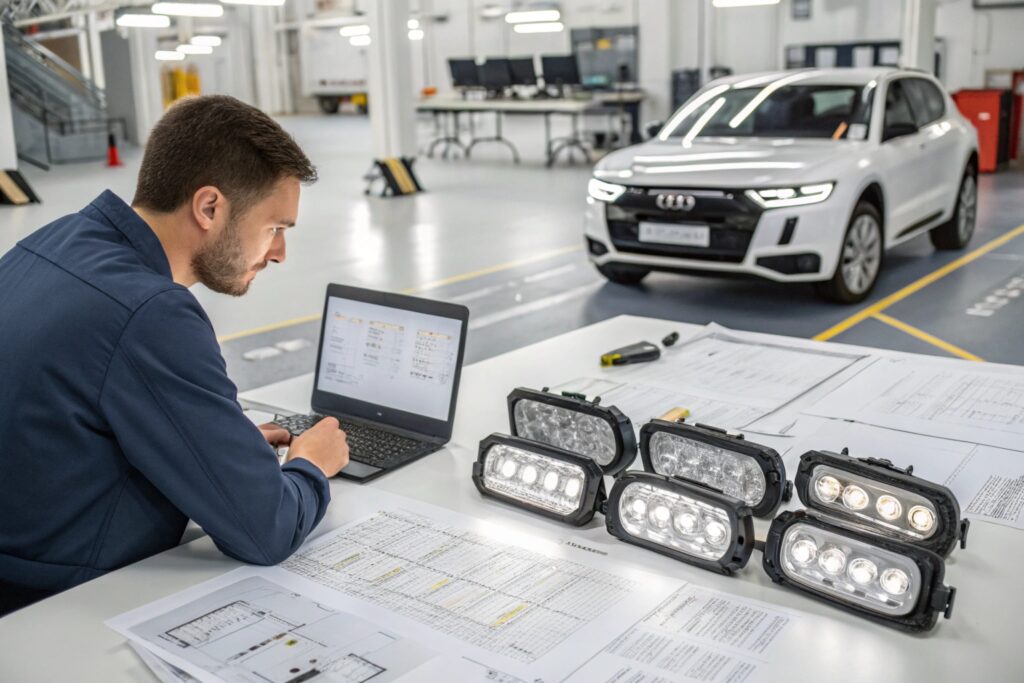
Sample validation should always begin with a strict comparison against approved drawings and technical specifications. Physical samples must be evaluated for build quality, material finish, and assembly consistency to ensure they align with your design intent.
Key checkpoints include housing dimensions, lens type, mounting interfaces, connectors, labeling, and overall workmanship. Compliance markings and certification labels must match the requirements of the target market, and they should reference the correct model rather than generic or “similar” products.
Component integrity is equally important. LED chips, drivers, PCBs, seals, and internal wiring should reflect the agreed bill of materials. Any substitution at the sample stage is a warning sign for future mass production risk.
From a timeline perspective, stock samples are typically available within 3–7 days, while customized samples usually require 10–25 days, depending on design complexity and client requirements. Understanding this lead time helps align validation schedules with project milestones.
2. What Functional Tests Should I Require for LED Automotive Lights?
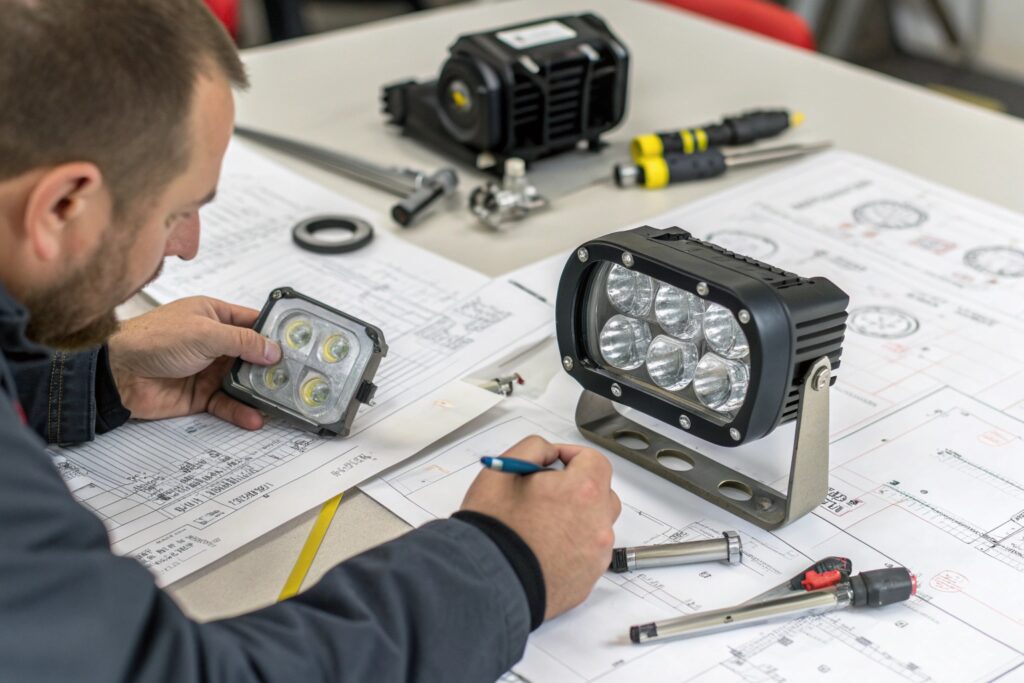
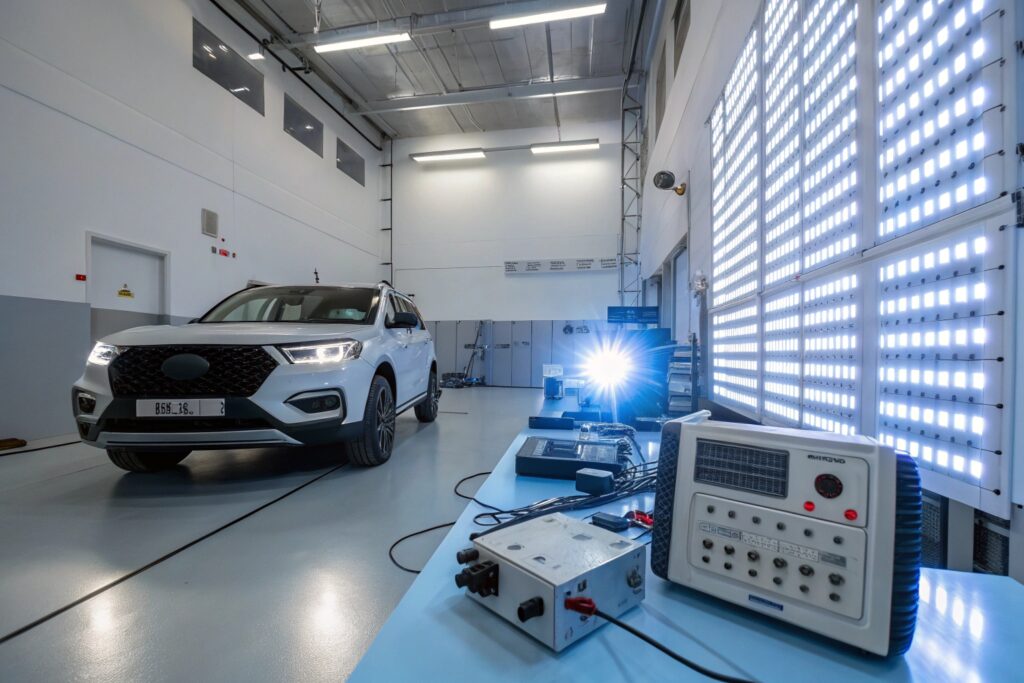
Functional testing verifies whether the sample performs as promised under real operating conditions. Electrical stability should be confirmed by checking voltage tolerance, current draw, and heat generation during operation.
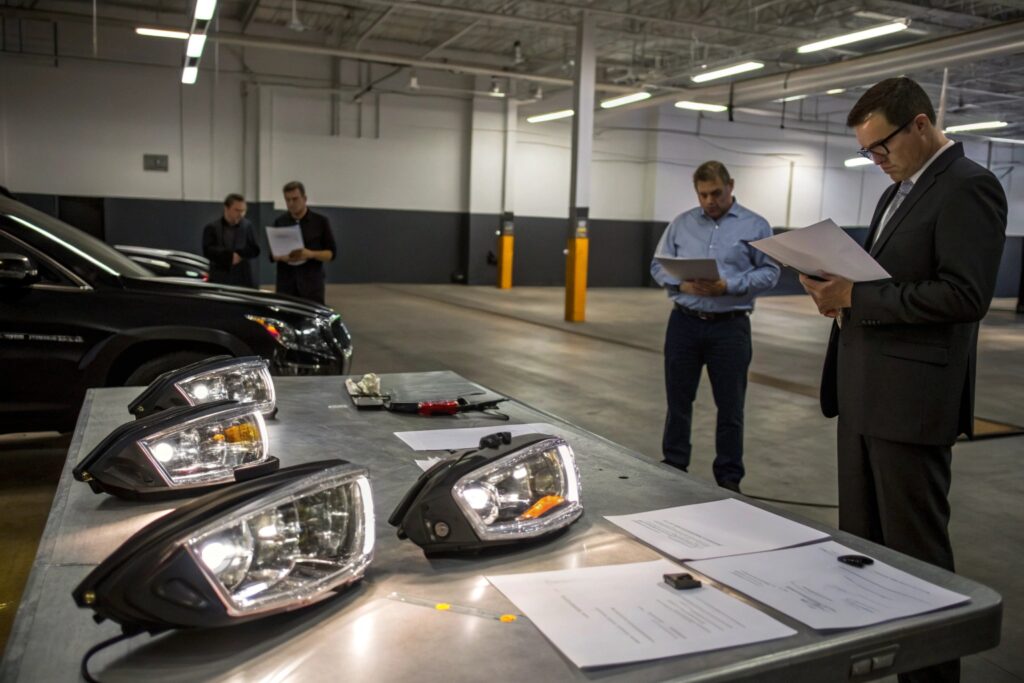
Light output must be measured against claimed specifications, including lumen output, beam pattern accuracy, and color temperature. Any visible deviation between the datasheet and real output should be addressed before approval.
Environmental performance is another critical factor. Samples should be checked for waterproof and dust resistance to confirm the stated IP rating. Extended run or burn-in testing helps identify early failures, thermal degradation, or color shift that may not be visible during short tests.
Side-by-side comparison with samples from other suppliers can further highlight real performance differences and reveal over-optimistic claims.
3. How Do I Document Sample Approval to Avoid Disputes Later?
A verbal or informal approval is not sufficient in international sourcing. Sample approval must be documented in writing and supported by objective records.
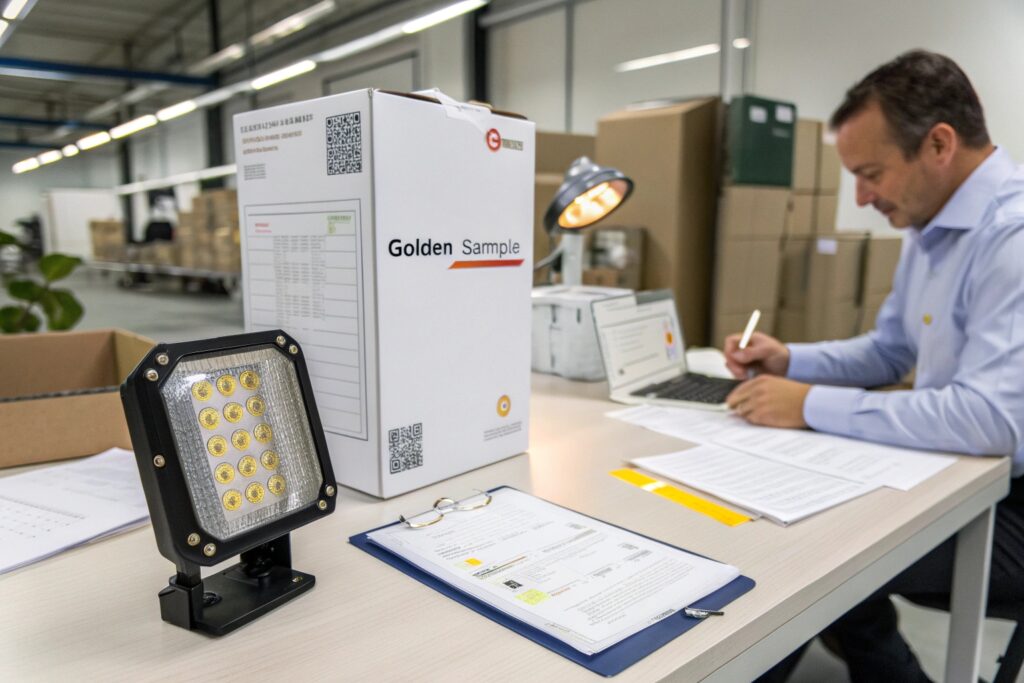
This includes detailed photos, test results, inspection checklists, and written confirmation that the approved sample represents the standard for mass production. One physical “golden sample” should be retained and clearly marked as the reference unit.
Packaging and labeling should also be validated at this stage to ensure adequate protection, accurate branding, and compliance during shipping and distribution. Locking these details early prevents disputes over cosmetic issues or transit damage later.
Once approved, the sample becomes the contractual benchmark. Any deviation in bulk production can then be objectively assessed against this reference.
4. What Risks Do I Face If Sample Validation Is Incomplete?
Incomplete sample validation significantly increases sourcing risk. Without thorough checks, suppliers may change components, lower material grades, or adjust processes during mass production without clear violation of loosely defined agreements.
The most common consequences include inconsistent performance, premature product failures, regulatory non-compliance, and rejected shipments. In severe cases, these issues can lead to customer claims, recalls, or permanent damage to brand credibility.
Investing time and structure in sample validation reduces total cost of ownership by minimizing rework, delays, and disputes after production has already begun.
Sources
- TecoLite – A Complete Guide on How to Import LED Lights from China
- HomemateTech – Import LED Lights from China Guide
- Minden International – Best Car LED Lights from China
- InTouch Quality – LED Lighting Inspection and On-Site Tests
- TU-BU – How to Import LED Lights from China
- CTSTek – LED Light Quality Inspection Checklist